
Data pipelines, reporting systems and dashboards that make performance easier to understand.
Automated reporting systems built to pull data from APIs, spreadsheets and business platforms, structure it in a central reporting layer, and turn it into dashboards, spreadsheets and usable business insights.
Less manual reporting, better data quality, and a clearer view of performance across the business.

What this helps with
Manual reporting replaced with clearer systems, more reliable data, and outputs that are easier to maintain and easier to trust.
API integrations
We connect platforms such as Amazon, Shopify, Mailchimp, advertising platforms and internal systems into a single reporting flow.
Data pipelines
We automate the movement of data from source systems into a clean reporting environment, reducing manual work and improving consistency.
Reporting databases
We structure raw data into a central reporting layer so it can be joined, queried and reused across dashboards, spreadsheets and operational reports.
Dashboards and reporting
We build clear reporting outputs for internal teams and clients, including dashboards, spreadsheet-based reporting and automated summaries.
Example work
Projects typically involve taking fragmented data from multiple sources and turning it into one reliable reporting system.
Amazon ecommerce reporting
Automated pipelines for Amazon seller and advertising data, combining operational reporting, inventory reporting and campaign performance into one central reporting flow.
Marketing and attribution reporting
Data from marketing platforms, call tracking systems and internal sources brought together to create unified reporting for agencies and performance teams.
Spreadsheet to automated reporting
Manual spreadsheet workflows replaced with automated pipelines, reusable report templates and cleaner outputs for ongoing reporting.
Platforms worked with
The right setup depends on the project. These are some of the platforms worked with, but not all of them.
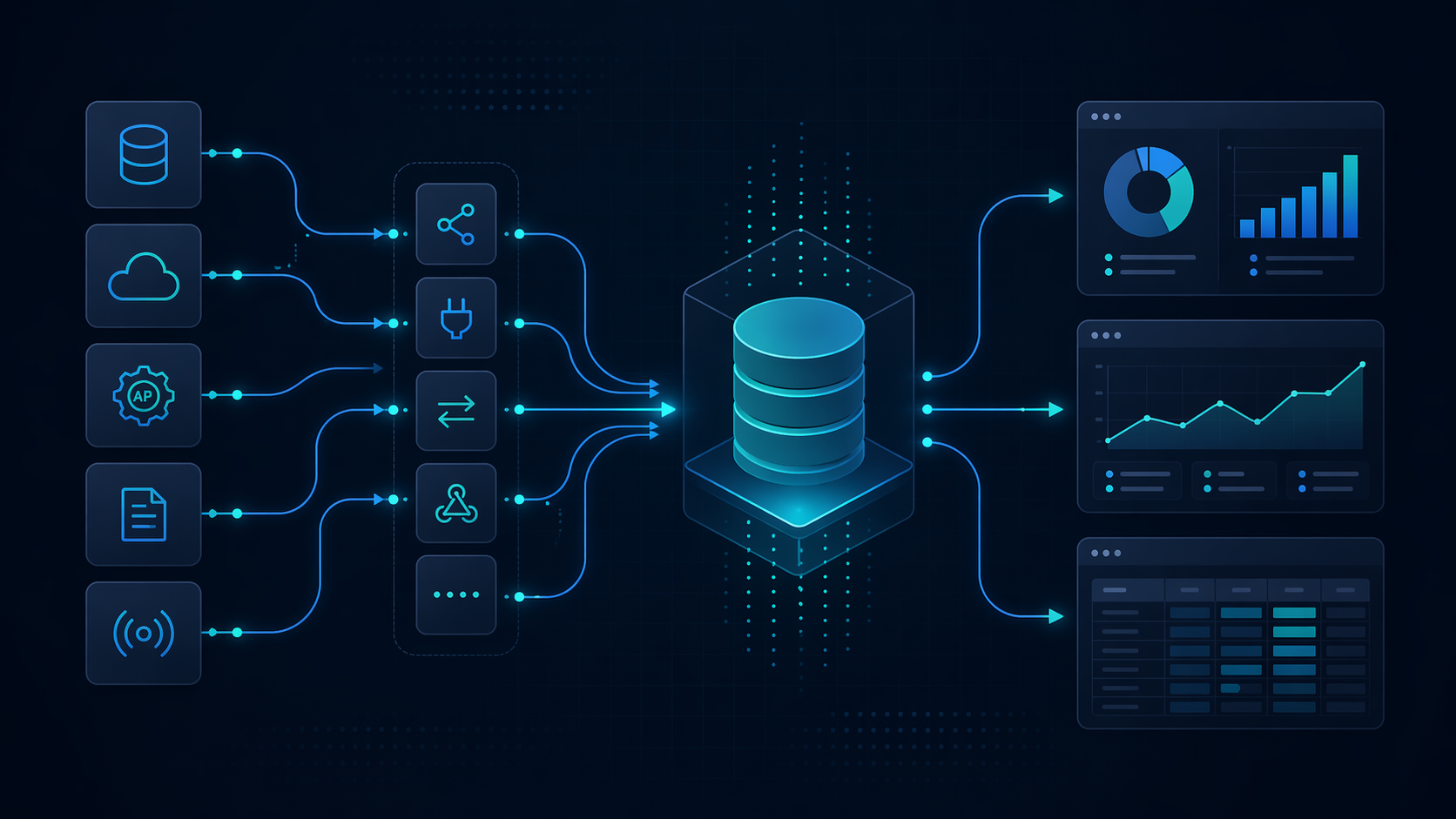
How the data flows
A typical project brings together multiple source systems, structures the data centrally and then feeds clear reporting outputs.
How it works
Practical solutions with enough structure to be reliable, without overcomplicating the setup.
Understand the data
We review the sources, reporting goals and business logic so the solution reflects how the business actually works.
Build the pipeline
We automate ingestion from APIs, spreadsheets, exports or email-based inputs so data arrives consistently and on schedule.
Structure the reporting layer
We shape the raw data into something usable for reporting, analysis and future extensions.
Deliver the output
We surface the final data in dashboards, spreadsheets or automated reporting workflows that teams can actually use day to day.
Why this approach works
The gap between raw data engineering and useful reporting is often where the real work sits. That usually means solving messy real-world problems such as inconsistent data, multiple sources, manual exports and evolving reporting needs.
Practical systems reduce manual work, improve reporting confidence and create a better foundation for growth.
Get in touch
If manual reporting needs replacing, data sources need connecting, or the reporting setup needs simplifying, get in touch.
Email: hello@autographicinsight.com
Website: autographicinsight.com